A session that ends is not a session that disappears.
Live translation is worth paying for once. A translated transcript, the recorded audio, and a published archive people can return to is worth paying for every week — and it's the same session, just kept.
Three things, saved automatically.
The translated transcript
Everything said, in each language you ran — not just the original. A Spanish listener keeps a Spanish record, and so does the office.
The recorded audio
The original room audio, and the translated voice lanes alongside it, stored privately for your organization.
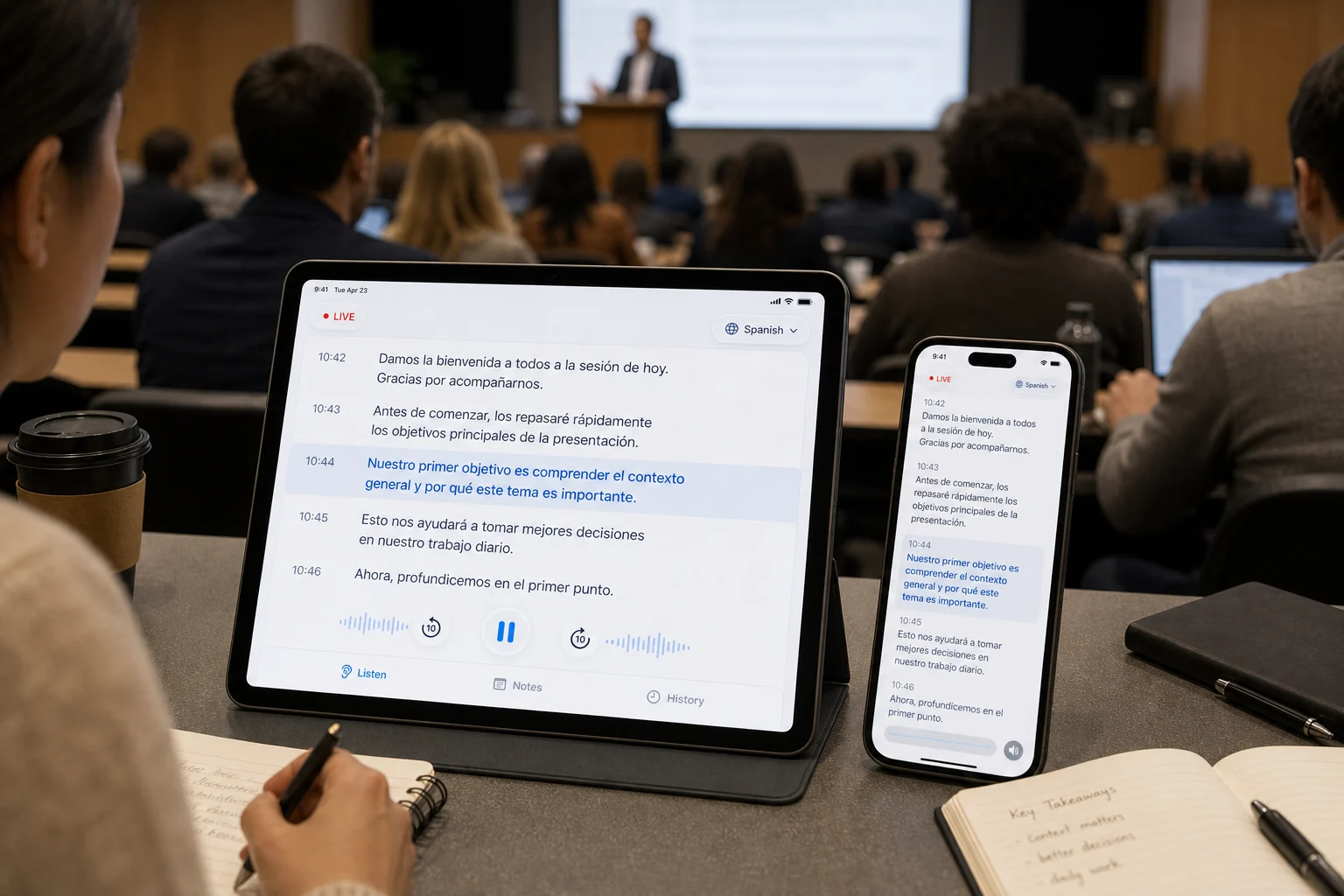
Aligned playback
Audio and transcript stay lined up, so tapping a line jumps to the moment it was said instead of leaving people scrubbing.
Publish the ones worth keeping. Keep the rest private.
Recording is not publishing. Sessions land in your archive in the booth, and you choose which ones appear on your public page — so a rehearsal, a staff meeting, or a service you'd rather not post stays where it is.
- Publish or unpublish from the booth, per session, at any time
- Group by channel — Sunday services, midweek, youth, or whatever you actually run
- Take one down and it leaves the public page immediately
Their language, their notes, their history.
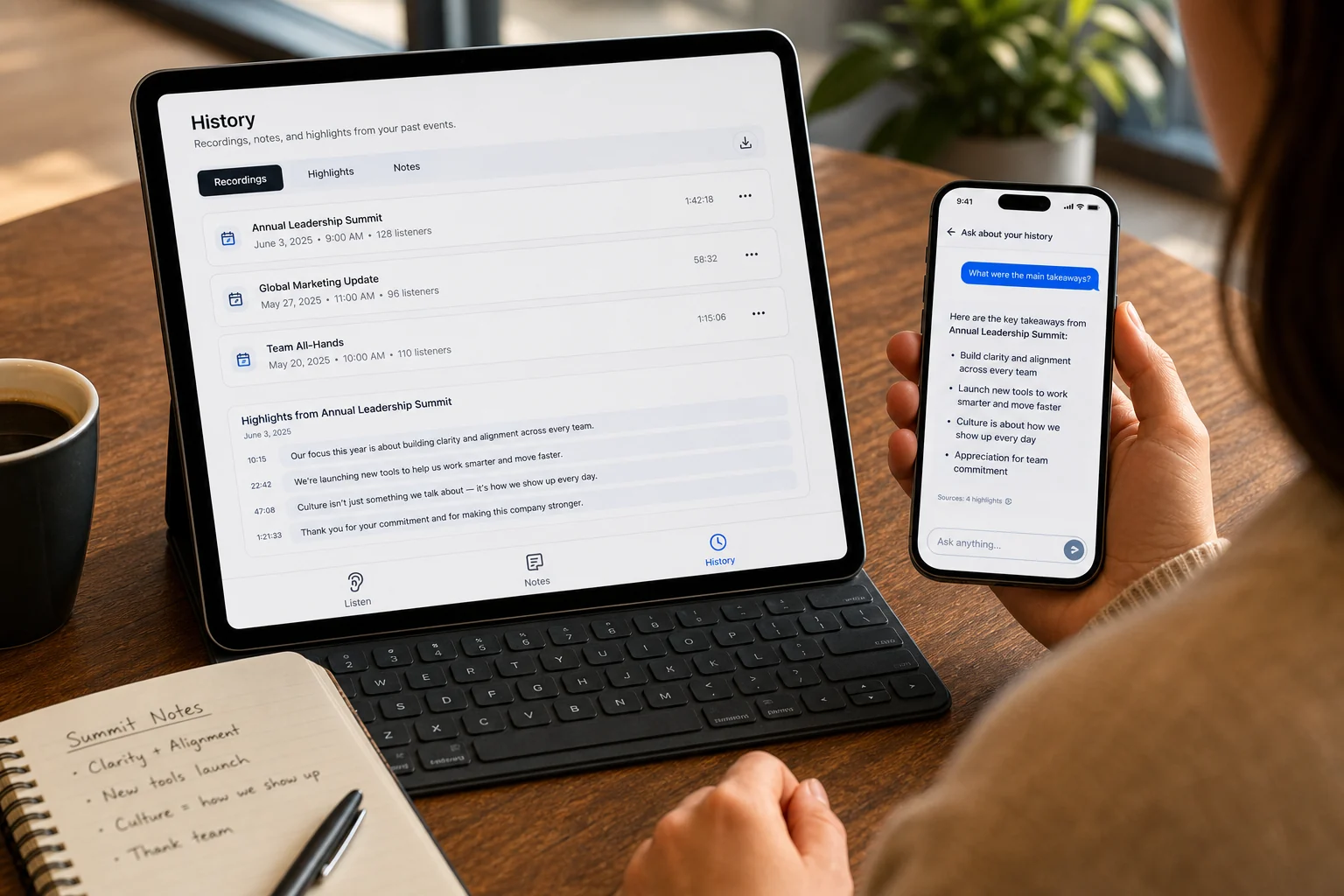
Someone who listened in Arabic doesn't want your English recording. In the Koine app they keep the version they actually heard, with the parts they marked, in a list of every session they've been to.
- Highlights and notes anchored to the line that prompted them
- Photos they took during the session, kept in place in the timeline
- Ask about what was said and get an answer grounded in the actual session — an optional personal subscription
The archive is what makes the second visit happen.
A one-off session reaches the people who were free that evening. A published archive reaches the ones who weren't — and gives the people who were something to send to a friend who speaks a different language.
Last Sunday, in five languages
New arrivals who can't yet follow a full service in your language often start with the archive, at their own pace, before they walk in. Members who travel keep up while they're away.
Lectures parents can catch up on
Parent evenings and assemblies stay available afterward in the family's language — which is usually the only way a working parent gets the information at all.
A record in the languages of the public
Council meetings and consultations leave a translated transcript, so language access is not limited to the residents who could attend in person.
Recording questions.
Is everything recorded by default?
Recording is a session setting, and the booth shows when a session is being saved. Nothing becomes publicly visible until you publish it.
Who can hear a published session?
Anyone who opens your public page, in whichever published language they choose. Unpublished sessions stay inside your own archive.
Do listeners keep a copy if we unpublish?
Their own notes and highlights stay theirs. Playback of a session you have taken down stops being available.
Which plans include recordings?
Recordings are included from the Standard plan upward, and in every event pass. See pricing.
Can we tell people when something new is up?
Yes — people who follow your organization can be notified when you go live, and your page shows what's coming next. See your page & followers.